By Sajid Ali, COO, Tech Mahindra Foundation
Chimamanda Ngozi Adichie warns us about the danger of a single story. How it creates stereotypes, and “the problem with stereotypes is not that they are untrue, but that they are incomplete.” I learned this lesson not from books, but from three people who shaped my understanding of what it means to be human in a society that decides some humans matter less than others.
My maternal uncle has intellectual disability. This is not the beginning of an inspirational story. This is the story of a man who exists, fully human, in a world that has never quite figured out what to do with him. When I watch him navigate bureaucracies designed without him in mind, filling forms for government schemes that reduce his humanity to percentages, trying to get a disability certificate that can qualify him for some of those schemes.
He is not a burden. He is not a blessing in disguise. He is not here to teach anyone about gratitude. He is simply a man who needs mental disability support and deserves to be seen as more than his place in the 21 types of disabilities classification.
There was a girl in our neighbourhood. Born with multiple disabilities, doctors predicted she wouldn’t live past three to four years. So, nobody gave her a name. Why name someone who isn’t expected to stay? She lived until fourteen. Fourteen years of breathing, feeling, existing “unnamed”. She died without ever experiencing the basic dignity of identity, in a society that had written her story before she could live it.
Her family spent fourteen years seeking support for disability certificates and assessments for assistive devices. When I think about disability inclusion in education or jobs for persons with disabilities (PwD), I think about this unnamed girl who never got the chance to even be excluded properly because she was rendered invisible from birth.
In my village in Saharanpur, there was a woman with intellectual disability. Everyone knew her story, but nobody spoke it aloud. She was repeatedly abused by men who knew she could not tell a coherent story of what had happened to her. Her mental disability made her easy prey and an unreliable witness. When I read about the Rights of Persons with Disabilities Act 2016 or the Accessible India Campaign, I think about this woman and how laws and campaigns can change everything for her and also mean nothing if they don’t reach the most vulnerable among us.
I tell you these stories not because they shaped me into someone who “cares about disability issues.” I tell them because they revealed to me that the single story we tell about disability is not just incomplete, it’s a lie.
The Single Story That Binds Us All
If you are reading this, you are part of a society that has been telling itself the same single story about disability for generations. We have told the story of the inspirational person who overcomes everything. We have told the tragic story of the person with disability who suffers bravely. We have told the story of the person who requires charity.
We have never told the story of the ordinary person with disability who simply wants to exist with dignity. This single story doesn’t just harm people with disabilities, it diminishes all of us. It creates a world where we measure human worth by productivity, where we confuse accommodation with charity, where we mistake inclusion for kindness rather than recognizing it as justice.
Every time we reduce someone to their disability percentage calculation, we participate in this single story. Every time we marvel at a person with a locomotor disability doing something ordinary, we reinforce it. Every time we assume that hearing impairment means silence or that visual impairment means dependence, we perpetuate it.
But here’s what Adichie teaches us: “Stories matter. Many stories matter. Stories have been used to dispossess and to malign, but stories can also be used to empower and to humanize.”
We are bound together by our shared responsibility to tell different stories. Stories where my uncle’s experience of navigating government schemes becomes part of a larger conversation about dignity and employment. Stories where the unnamed girl’s existence demands better systems of support and assistive devices. Stories of women from our village whose experiences lead to effective justice and protection mechanisms.
Whether you have a disability or not, whether you have a family member with a disability or not, you live in a society shaped by these incomplete stories. You benefit from systems that exclude others, or you suffer from systems that could exclude you. You are part of this story of ours.
The government schemes for people with disabilities in India exist because we collectively decided that some citizens need additional support. The disability NGOs in India exist because we acknowledge systemic failures. We are all part of creating and maintaining these systems, and we are all responsible for their failures.
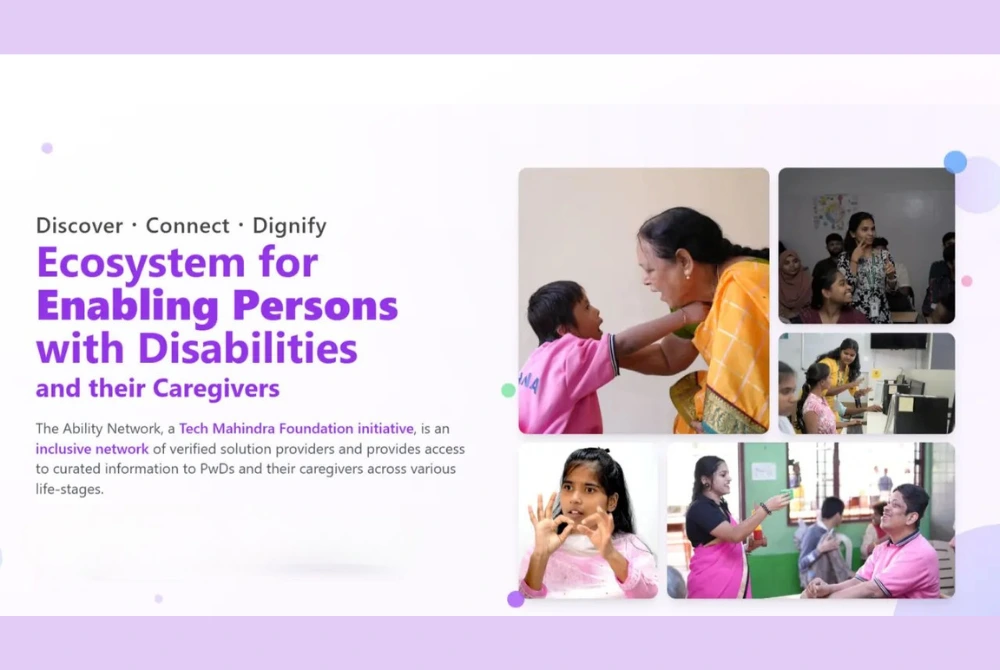
When we launched The Ability Network (TAN), we made a choice about which stories to centre. Not the comfortable ones. Not the simple ones. The true ones. Because the single story of disability is not just incomplete, it is dangerous. And we all have the power to tell different stories.
The Moment for Action Is Now
The time for comfortable single stories about disability is over. The moment for multiple stories, complex and real, is now. The Ability Network is not just a platform. It’s our collective answer to the question: What happens when we stop telling single stories and start building multiple narratives?
Here’s what you can do right now:
If you are a person with a disability:
Share your story on TAN. Not the inspirational version, not the tragic version, but your real story
Connect with others who understand that your experience cannot be reduced to your disability certificate or your need for assistive devices
Use the platform to access information about benefits for differently abled and how to apply for disability certificate online, but more importantly, use it to find a community
2. If you are a family member or caregiver:
Join conversations about authentic experiences,
Share resources about mental disability support, visual impairment certificates, or whatever support systems you’ve navigated
Connect with others who understand the gap between policy and reality
3. If you are an employer or educator:
Learn about authentic inclusion beyond reservation policies for people with disability in jobs or token disability inclusion in education
Engage with real stories from people with disabilities before making decisions about accessibility
Use TAN to connect with disability NGOs in India doing meaningful work in your area
4. If you are a policymaker or service provider:
Listen to the stories that challenge your assumptions about what people with disabilities need or want
Understand that behind every statistical category. A person with locomotor disability, hearing impairment, or mental disability is a full human being with a complex story
Use TAN to access the real experiences of people
5. If you are simply a human being who wants to live in a more just world:
Challenge single stories when you encounter them
Support the platform by amplifying authentic voices from the disability community.
Recognise that disability inclusion is all about creating a society that works for everyone.
Visit TAN not just to access services or information, but to become part of a movement that insists every story matters. Share it with others who need to hear different stories about disability. Use it to connect with people who understand that behind every statistic are real humans deserving of dignity.
The unnamed girl from my neighbourhood died without a name, but her story doesn’t have to die with her. My uncle continues to exist with dignity despite systems designed without him in mind, and his story can shape better systems. The woman from our village deserved the protection she never received, and her story can demand better justice.
The time is now. The platform is ready.